
Workshop talk at Leuphana
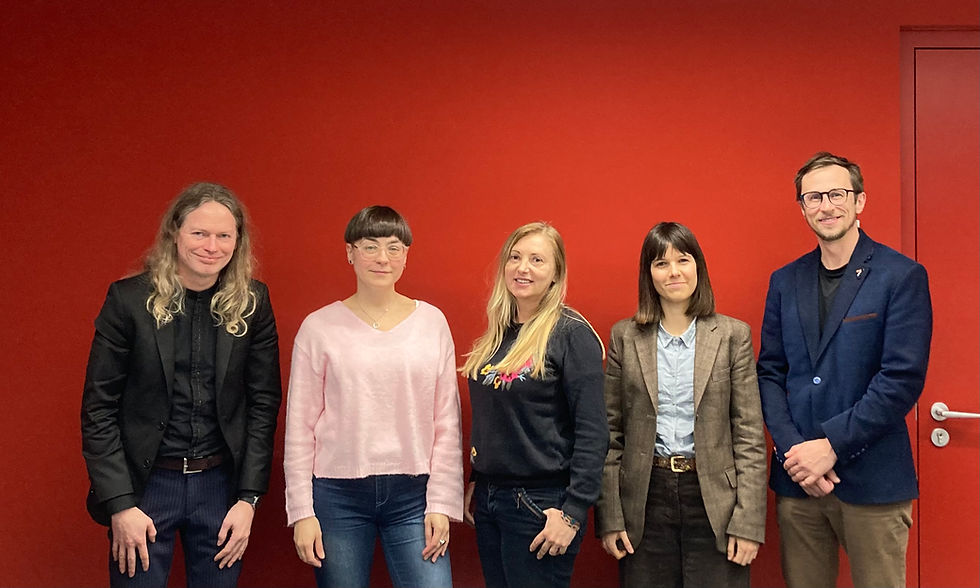
I had the privilege of spending a day at the Leuphana Institute for Advanced Studies (LIAS) at Leuphana University Lüneburg. While presenting at the workshop “Artscapes and Radical Ecology in the Urbanocene: Theories and Praxis in Dialogue,” I had the chance to share the first ideas from my forthcoming book project.
Many thanks to Tijen Tunali for organizing the event and to Thomas Krutak for all the help with practical matters, and to all the speakers—Tijen, Oleksandra Nenko, Chiara Stefanoni, and Sacha Kagan—for their inspiring talks and thoughtful questions.
.
Paininting Cities: Macropaintings, Violence and the Politics of Nature at Urban Margins
Representing a distinctive response by certain urban authorities to persistent violence and poor living conditions at the urban margins, macromurals have recently emerged as part of a broader field of social interventions. By emphasizing the participation of local residents, these initiatives operate under the assumption that transforming the physical environment will also reshape social and individual conditions. Existing studies have largely interpreted macromurals as a form of arte urbano that enables communities to co-produce public space and express collective meanings. More critical accounts have framed them as vehicles for political agendas or as products of corruption. Yet one striking feature remains underexplored: the near-universal presence of “nature“ in these murals. Engaging across the social sciences and humanities, this presentation investigates whether (re)connection with the environment can help address generational traumas tied to physical, structural, and symbolic violence resulting from decades of conflict, extractivism, and pervasive inequality. It argues that the natural environment depicted in these works serves not only as a communicative medium to the broader city but, crucially, as a way for residents to reconnect with themselves. Drawing on ethnographic research in Colombia, this project examines the entanglements of governance, violence, inequality, and “nature,” showing that macromurals function not only as objects of analysis but also as methodological and conceptual tools—a heuristic device for rethinking urban violence and the human relationship with the environment.


Comments